Shipping a 20ft container from Rotterdam to Paramaribo is a routine movement for a forwarder and a once-in-a-decade event for the person paying for it. This guide covers what the lane consists of, which name the destination port now carries, and the one decision that moves the total more than any freight quote.
First: the port's name changed
If you are searching for "Nieuwe Haven", you are using a name the port no longer has. "Until 2016, the harbour was called Nieuwe Haven"; it was renamed on 11 November 2016 to Jules Sedney Harbour, after the prime minister, "in recognition for his involvement in the founding of the harbour".
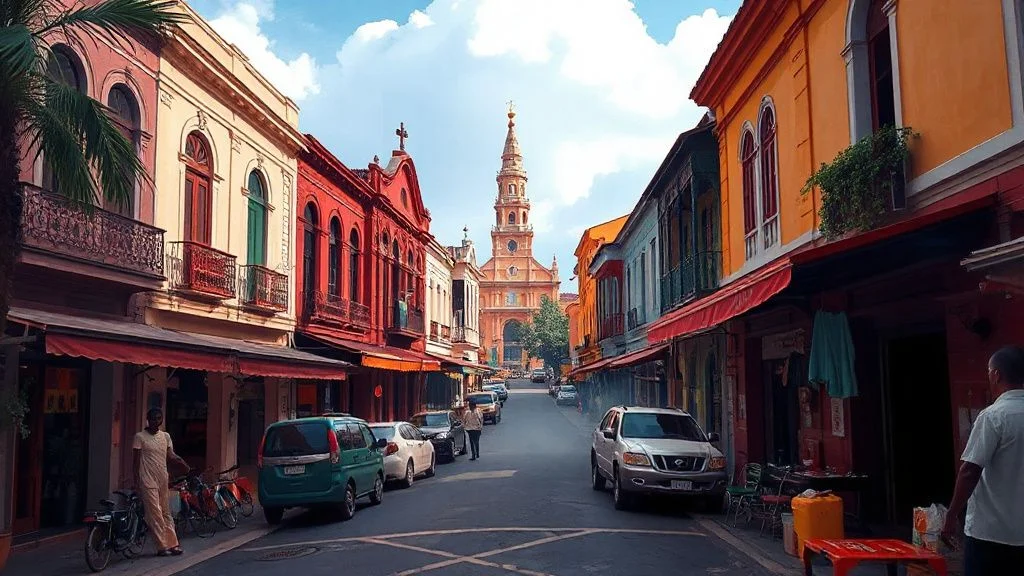
This is not trivia. Paperwork, carrier schedules and terminal references increasingly use the current name, and a booking or a customs document that names the port inconsistently is an avoidable question at the counter. Both names refer to the same place: the main seaport for cargo ships in Paramaribo, in Beekhuizen, about 60 hectares, operated by Havenbeheer Suriname, which was founded on 11 November 1971.
Worth knowing about the quay you are arriving at: it was "originally designed for bulk transport" and "later rehabilitated for container transport", and later enlarged with a dedicated oil terminal. It is one of Suriname's two main cargo ports, the other being Nieuw-Nickerie.
Why this article gives you no freight rate
Container freight on this lane is quoted per booking. It moves with the season, the carrier, the space available and surcharges that are themselves revised monthly, which is why any figure printed in an article is wrong by the time you read it. A hypothetical example — "suppose your goods are worth five thousand" — is worse than silence, because it reads like a calculation and is not one.
What is useful instead is knowing what a quote must contain, so you can compare two of them. Ask for each of these as a separate line:
- Ocean freight for a 20ft standard container, and whether a high-cube or reefer changes it.
- Surcharges named individually rather than rolled into one figure.
- Terminal handling at both ends, Rotterdam and Paramaribo, since these are often quoted separately and are not small.
- Customs clearance and documentation fees, and whether filing the exemption application is included.
- Inland haulage at both ends, to and from the door.
- Free time and demurrage: how many days the container may sit before charges begin. This is the line that most often turns a good quote into an expensive move.
- Insurance, which is optional and priced on declared value.
A quote that cannot be broken down this way is not cheaper than one that can; it is just less legible.
The decision that moves the total most
For a household move the duty side is usually decided by the verhuisboedel exemption rather than by the freight rate. Douane Suriname grants it for "een gebruikte verhuisboedel" — a used household shipment — belonging to "uitsluitend niet-ingezetenen", non-residents only, and it requires "een ondertekende inventarislijst".
So before comparing freight quotes, establish whether your shipment qualifies, because that answer is worth more than the difference between two carriers. The conditions, the implementing decision and the form are set out in our guide to the verhuisboedel exemption.
Transit time: the published figures disagree
This article will not give you a sailing time, and the reason is worth stating. A Dutch forwarder puts the port-to-port voyage on this lane at roughly thirty-five days; a 2025 freight guide lists eighteen. Those are not two estimates of the same thing within a tolerance, they are nearly a factor of two apart, and choosing one of them would mean inventing a precision nobody published.
Get the transit time from the carrier for the specific sailing you are booking, and plan your own dates on that rather than on a guide. Published operator lists for the port also differ between sources, so treat them as a starting point and confirm who is actually sailing when you need to move.
Practical sequence
- Settle the exemption question first. It is a documents-and-registration question that has to be right months before loading.
- Get two or three quotes broken into the lines above. Comparing totals tells you nothing.
- Prepare the inventory list properly. It is a signed declaration, and it is the document you have most control over.
- Ask about free time explicitly. Demurrage at the destination is the most common unbudgeted cost on a household move.
- Use the current port name in every document. Jules Sedney Harbour, Paramaribo.
Where to check
The port facts above are from the entry on Jules Sedney Harbour and the customs conditions from Douane Suriname's work instruction, both read on 23 October 2026. For schedules and operators at the port, Routescanner's Paramaribo page is a starting point, though its schedules sit behind an account. For your own move, the carrier gives the sailing and the Inspecteur der Invoerrechten en Accijnzen decides the exemption.
AI-Generated Content: This article was created with AI assistance and may contain inaccuracies. Please verify important information with official sources.
Price your own shipment
Enter your container size and category to see the real total for Rotterdam → Paramaribo.
Primary Sources
Last updated: October 2026