
This guide was synthesized using the latest legislative data and verified by our editorial board. Laws are subject to change; always consult official sources for final confirmation.
Moengo, a town located in the Marowijne District of Suriname, offers a fascinating blend of history and modern-day life. Positioned between Paramaribo and the border town of Albina along the Cottica River, Moengo has transformed from a Maroon village into a significant urban center. This article delves into its history, current lifestyle, and what expatriates can expect when living in this unique location.
Historical Overview of Moengo
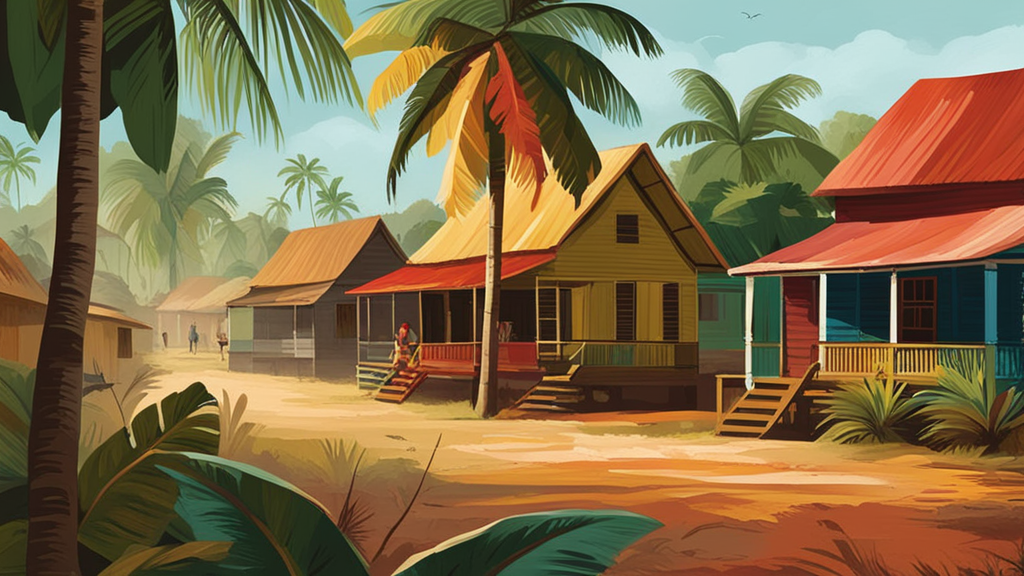
Moengo's origins can be traced back to its establishment as a Maroon village, strategically situated on a hill overlooking the Cottica River. Initially, this settlement faced challenges due to the bauxite-rich terrain, which made construction difficult. However, in 1916, the American company Alcoa began mining operations, marking a pivotal moment in Moengo's development. The town was officially designed in 1919 to accommodate around 4,000 residents, becoming a central hub for bauxite mining and storage.
The town was historically segregated, with distinct quarters for different ethnic groups, including the American Quarter for expatriates and the Surinamese Quarter for local Afro-Surinamese. The Maroons, the original inhabitants, often faced restrictions in the town until the mid-20th century. This segregation reflected the broader racial dynamics of the time, which persisted until the 1960s when the Maroons became the predominant ethnic group in the region.
The Impact of Conflict and Economic Changes
The 1980s were tumultuous for Moengo, as the Surinamese Interior War reached its streets. The Jungle Commando, a rebel group, captured the town for nine months before it was retaken by the National Army. This period resulted in significant loss, with many residents fleeing, the bauxite mine closing, and numerous buildings destroyed. By the late 20th century, Moengo began to diversify economically, moving away from its heavy reliance on mining.
In 2014, Alcoa announced the depletion of its bauxite reserves, leading to the closure of its local operations. The Government of Suriname took over Suralco, the local subsidiary, in 2017, marking a new chapter in Moengo's economic landscape. Today, residents are adapting to a post-mining economy, focusing more on agriculture, small businesses, and tourism.
Modern Life in Moengo
Today, Moengo is characterized by a blend of cultural influences, vibrant community life, and ongoing development. The population, estimated at around 10,834 as of the 2012 census, enjoys a unique cultural tapestry that includes Afro-Surinamese, Javanese, and Maroon heritages. The town hosts two first-division football clubs, Inter Moengotapoe and Notch, showcasing the local passion for sports.
Art and culture are also thriving in Moengo. The Contemporary Art Museum Moengo, established to promote local and international art, serves as a cultural hub. The annual Moengo Festival, initiated in 2013, attracts thousands of visitors, celebrating music, theatre, dance, and visual arts, highlighting the town's rich creative spirit.
Transport and Accessibility
Moengo's accessibility has improved significantly over the years. Originally reachable only by river, road connections began developing in the 1920s, with the East-West Link opening in 1964. Today, the Moengo Airstrip allows for air travel, enhancing connectivity with Paramaribo and other regions of Suriname. The Port of Moengo, once owned by Alcoa, is now a medium-sized port operated by Traymore Docks, facilitating the transport of goods.
Traveling to Moengo from Paramaribo takes approximately two hours by car, making it a feasible location for expatriates seeking a more tranquil lifestyle away from the capital. Regular bus services also connect the town with other parts of the district, ensuring convenient transportation options.
Climate and Seasonal Considerations
Moengo experiences a tropical climate, with temperatures averaging between 27°C and 32°C (80°F and 90°F) year-round. The region has two main seasons: a rainy season from April to August and another from November to February, while the dry season lasts from February to April and August to November. Expats should prepare for high humidity and occasional heavy rainfall during the wet months, which can impact outdoor activities.
Understanding the local climate is crucial for planning day-to-day activities, especially for families and digital nomads. Proper ventilation and air conditioning are essential for comfort, given the tropical heat. Residents often adapt their routines around the weather, utilizing the dry season for outdoor events and activities.
What Expats Should Know
For expatriates considering a move to Moengo, several practical aspects are worth noting. The cost of living is generally lower than in Paramaribo, with housing, food, and transportation being more affordable. However, amenities may be limited, and access to certain goods may require travel to larger towns or the capital.
Engagement with the local community is highly encouraged, as this enhances the expatriate experience. Learning basic Dutch or Sranan Tongo can facilitate interactions with locals. Additionally, exploring local markets and participating in cultural events can provide deeper insights into the unique heritage of Moengo.
Conclusion
Moengo, with its rich historical background and evolving cultural landscape, presents a unique opportunity for expatriates to experience life in Suriname. From its roots as a bauxite mining town to its current status as a vibrant community, Moengo offers a blend of tradition and modernity. Understanding its history, cultural dynamics, and practical living conditions will equip newcomers with the tools to thrive in this remarkable part of Suriname.
AI-Generated Content: This article was created with AI assistance and may contain inaccuracies. Please verify important information with official sources.
Primary Sources
Last updated: September 2026