This guide was synthesized using the latest legislative data and verified by our editorial board. Laws are subject to change; always consult official sources for final confirmation.
For expatriate families relocating to Suriname, understanding the landscape of private school fees in Paramaribo is crucial for effective budgeting and planning. This guide provides an in-depth look at the costs associated with private education in the capital city, comparing them to familiar benchmarks and offering practical advice to help families navigate their options.
What can we help you with?
Three short questions. Then we get in touch. No account needed.
Overview of Private Education in Paramaribo
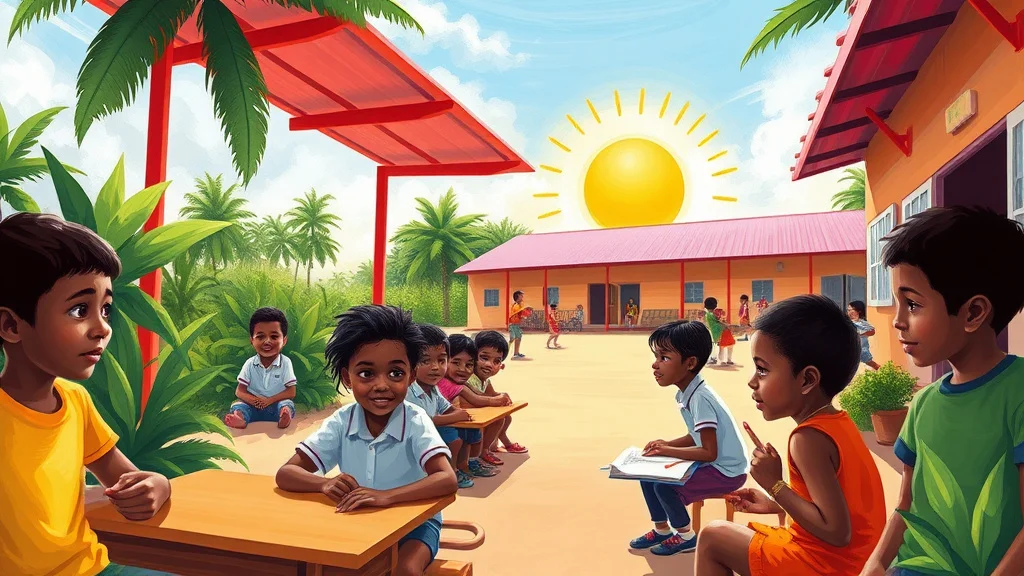
In Paramaribo, the private education sector is diverse, catering primarily to expatriates and local families seeking an international curriculum. As of 2026, several private schools offer different educational philosophies, including American, British, and Dutch programs. The international schools are particularly appealing due to their English-language instruction, which eases the transition for children from English-speaking backgrounds.
Typically, private schools in Paramaribo charge significantly higher fees than public institutions. While public education is free at the primary and lower secondary levels, private schools often require substantial financial investment. This investment is justified by the promise of smaller class sizes, individualized attention, and a curriculum that aligns with international standards.
Typical Tuition Fees for Private Schools
As of 2026, tuition fees for private schools in Paramaribo can vary widely based on the institution and the curriculum offered. On average, families can expect to pay between 10,000 to 20,000 SRD (approximately 1,400 to 2,800 USD or 1,300 to 2,600 EUR) per year for primary education. Secondary education fees can be higher, ranging from 15,000 to 30,000 SRD (approximately 2,100 to 4,200 USD or 1,900 to 3,900 EUR).
For instance, the International Academy of Suriname, known for its comprehensive American curriculum, typically charges around 15,000 SRD (about 2,100 USD or 1,900 EUR) for primary grades and can go up to 25,000 SRD (approximately 3,500 USD or 3,200 EUR) for secondary grades. These fees often include additional costs for registration, uniforms, and extracurricular activities, which can add another 2,000 to 5,000 SRD (approximately 280 to 700 USD or 260 to 650 EUR) annually.
Understanding Additional Costs
When budgeting for private school education in Paramaribo, it is essential to consider additional costs that may not be immediately apparent. Registration fees are typically non-refundable and can range from 2,000 to 5,000 SRD (approximately 280 to 700 USD or 260 to 650 EUR) per child. Additionally, many schools require a capital fund fee, which contributes to infrastructure and facility improvements, often amounting to 5,000 SRD (about 700 USD or 650 EUR).
Moreover, families should be aware of the costs associated with uniforms, textbooks, and school supplies. Uniforms can cost between 1,500 to 3,000 SRD (approximately 210 to 420 USD or 200 to 400 EUR), depending on the school’s requirements. Textbooks and supplies may add another 1,000 to 2,000 SRD (approximately 140 to 280 USD or 130 to 260 EUR) to the annual budget. These additional expenses can significantly impact the overall cost of education, so it is advisable to factor them into your financial planning.
Comparing Private Schools in Paramaribo
Paramaribo boasts several prominent private schools, each with unique offerings. The QSI International School of Suriname, for example, follows an American curriculum and is known for its diverse student body, representing various nationalities. The school typically charges tuition fees in the range of 15,000 to 30,000 SRD (approximately 2,100 to 4,200 USD or 1,900 to 3,900 EUR) depending on the grade level.
Another notable institution is the AlphaMax Academy, which offers a blend of international and local curricula. Tuition fees here are generally comparable to those at QSI, with additional costs for extracurricular activities such as sports and arts programs. Families should also consider the Suriname International School, which provides a curriculum focused on 21st-century skills, with fees typically falling within the same range.
When evaluating schools, consider not only the fees but also the quality of education, facilities, and extracurricular opportunities. Visiting schools, meeting with faculty, and speaking to other expatriate families can provide valuable insights into the best fit for your child.
Practical Tips for Budgeting
To effectively budget for private school education in Paramaribo, start by calculating the total expected costs, including tuition, registration fees, uniforms, and supplies. It is advisable to create a detailed budget that accounts for these expenses, as well as any potential currency fluctuations. The Surinamese Dollar (SRD) has experienced significant devaluation, which can impact your financial planning, especially if you are converting from USD or EUR.
Consider setting up a local bank account to facilitate payments in SRD, as not all businesses accept card payments. This can help you avoid currency exchange fees and ensure you have the necessary funds available for school-related expenses. Additionally, inquire about any discounts available for early payment or for families with multiple children enrolled in the same school.
What Expats Should Know
For expatriate families, navigating the private school landscape in Paramaribo can be challenging. Language barriers may arise, especially if your child is not fluent in Dutch. However, many international schools offer English-language instruction, which can ease this transition. It is advisable to familiarize yourself with the school’s language policy and support services for non-Dutch speakers.
Another important consideration is the academic calendar. The school year in Suriname typically runs from August to July, which may differ from your home country’s academic schedule. Planning your relocation around this calendar can help ensure a smoother transition for your child.
Finally, engage with local expatriate communities, which can provide support and valuable information on the best schooling options. Online forums and social media groups can be excellent resources for connecting with other families and sharing experiences.
Conclusion
Understanding private school fees in Paramaribo is essential for expatriate families planning to relocate to Suriname. With tuition fees typically ranging from 10,000 to 30,000 SRD (approximately 1,400 to 4,200 USD or 1,300 to 3,900 EUR), families must budget carefully to cover not only tuition but also additional costs such as registration fees and uniforms. By researching schools, considering additional expenses, and engaging with local communities, families can make informed decisions that support their children’s educational needs in this vibrant tropical country.
AI-Generated Content: This article was created with AI assistance and may contain inaccuracies. Please verify important information with official sources.
Last updated: July 2026